
Manga review · Seinen · Dark fantasy
Berserk: Trauma Put On Armor and Decided to Stand on Business
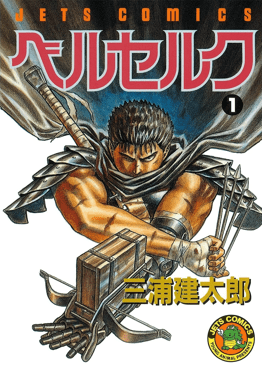
Spoiler warning: Major spoilers through Episode 373, with a brief publication note through Episode 386.
Recommendation level: Astronomically high — 9.8/10, essential reading for mature audiences.
Content warning: Graphic violence, sexual violence, abuse, torture, and enough emotional damage to make your therapist request backup.
Kentaro Miura looked at trauma and said, “Bet — give it a sword the size of a MARTA bus.”
That is Berserk in its simplest form. In its truest form, though, it is one of the greatest examinations of ambition, friendship, abuse, fate, masculinity, grief, and stubborn human survival ever put on paper. Folks call it grimdark because everybody is bleeding and demons stay doing the absolute most, but Berserk is not fundamentally about darkness. It is about the tiny flame a person protects while darkness is throwing a full supernatural RICO case at them.
Guts is not inspiring merely because he refuses to die. Roaches do that. Guts is inspiring because, after being betrayed, violated, mutilated, and spiritually marked for death, he slowly relearns how to care about people without treating love like another battlefield. That is the real struggle. Swinging the Dragon Slayer through twelve demons is the easy part. Letting somebody help him afterward? Brother fighting for his life.
Guts, Griffith, and the most toxic friendship in fantasy
The central relationship is not hero versus villain. It is wounded freedom versus perfect control.
Griffith sees people as pieces inside his dream. Guts initially has no dream at all; he survives because surviving is the only language his body knows. Their friendship becomes real precisely because Guts is the one person Griffith cannot completely reduce to a tool. That is why Guts leaving in Episode 36 destroys him. Griffith has conquered armies, manipulated royalty, and built more motion than a promoter during All-Star Weekend, but one muscular homeless swordsman says, “I need to find myself,” and this allegedly perfect mastermind crashes out before breakfast.
The brilliance is that Guts does not leave because he hates Griffith. He leaves because he believes Griffith’s own philosophy: an equal must pursue an independent dream. Griffith inspires Guts to become free, then cannot emotionally survive that freedom. The contradiction is nasty.
Episode 22, “Bonfire of Dreams,” is where the whole tragedy quietly explains itself. Guts compares the Hawks’ individual dreams to small fires gathered around Griffith’s larger flame. It is beautiful, but the metaphor is also a warning. Griffith does not simply illuminate people — he consumes their identities and converts them into fuel.
Then come Episodes 46–47, beginning with “Wound,” where Guts and Casca’s intimacy becomes an encounter between two scarred people rather than cheap romantic payoff. Guts’ body remembers abuse before his conscious mind can control it. Casca does not magically heal him; she recognizes him. Miura understood that love cannot delete trauma. It can only create a space where trauma no longer has to lie.
And then the Eclipse begins in Episode 73.
That entire sequence is legendary not merely because it is horrifying, but because it corrupts everything the Golden Age taught us to value. Brotherhood becomes livestock. Ambition becomes appetite. Griffith turns the Hawks’ devotion into the literal material of his rebirth. My man took “standing on business” and turned it into an interdimensional pyramid scheme.
The Eclipse works because Miura made us live with the Hawks first. Judeau, Pippin, Gaston, Corkus — these are not decorative bodies waiting for the gore machine. They have habits, insecurities, jokes, and plans. When they die, Berserk is not clearing the supporting cast. It is murdering a possible future.
Why the story is actually hopeful
After the Eclipse, Guts believes rage is the only honest response to suffering. The Black Swordsman persona is therefore less an identity than an extended crash-out. He acts cold because tenderness has become evidence the universe can use against him.
The turning point is Episode 129, “Cracks in the Blade.” Godot tells Guts, in essence, that revenge has allowed him to replace grief with anger while abandoning the living person who still needs him. This is possibly the most important conversation in the manga. Godot is not telling Guts to forgive Griffith. Absolutely not. He is telling him that obsession with the dead can become another way of betraying the living.
That is the moral engine of Berserk: evil repeatedly asks people to turn love into possession, sacrifice, fanaticism, or revenge. Healing begins when they refuse.
This is why the new traveling party matters. Schierke, Farnese, Serpico, Isidro, Roderick, Puck, and Casca are not replacements for the Hawks. They are proof that connection after catastrophe is possible. Guts does not recover his old family. He learns that building another one does not dishonor the first.
Farnese might quietly have the best character development in the series. She begins as a sadistic religious authoritarian who burns supposed heretics because cruelty makes her feel spiritually important. Later she accepts the humiliation of becoming a beginner, learns magic, cares for Casca, and develops a self not based upon domination. That is growth with receipts.
Even the Berserker Armor, introduced across Episodes 225–226, is more than the coldest armor design ever created. It transforms self-destruction into a combat system. The armor does not heal Guts; it suppresses pain, forces broken bones into motion, and lets him spend tomorrow’s body to survive today. In other words, it is unhealthy coping with elite stats.
Every time Guts uses it, the question is not simply whether he can win. It is whether there will be enough of him left to return to the people waiting for him.
Miura’s artwork is outrageous
The visual progression borders on disrespectful. Miura begins as an extremely gifted artist and somehow evolves into a medieval architect possessed by a printer demon.
Battlefields contain hundreds of individually readable figures. Armor has weight. Horses move like animals instead of motorcycles wearing fur. Apostles resemble nightmares produced by Hieronymus Bosch after bad wings and a dangerous edible. Falconia looks like Buckhead if Buckhead were designed by angels, funded by demons, and approved through a deeply suspicious zoning process.
The art never exists only to flex, either. Miura uses detail philosophically. Human spaces are cluttered, fragile, and lived-in. Griffith’s later world is impossibly clean, symmetrical, and grand. It is gorgeous because authoritarian fantasies are supposed to be gorgeous. If Falconia looked evil, the trap would not work.
Casca’s dreamscape in Episodes 348–354 may be Miura’s greatest fusion of image and psychology. Her mind appears as a broken doll carried through a wasteland by a wounded black dog representing Guts. The metaphor is not subtle, but subtlety would be unemployed here. The sequence makes memory restoration feel like an archaeological dig through somebody’s pain.
Then Episode 364, “Teardrop of Morning Dew,” reveals the connection between Griffith and the Moonlight Boy with almost unbearable tenderness. It complicates the final conflict because Guts and Casca’s child is not merely endangered by Griffith — the child shares Griffith’s vessel. You cannot solve that situation by swinging the big sword extra hard, even though Guts will absolutely consider it.
The criticisms — because even the GOAT be tripping
First, Berserk uses sexual violence too often. The Eclipse assault has enormous narrative consequences, but later material sometimes repeats sexual threat as a shortcut for horror. The trolls are the clearest example. Miura occasionally frames violation with more visual sensationalism than the subject requires. Saying this does not mean the series secretly endorses abuse; it means artistic intent and artistic execution are different questions. A masterpiece can still fumble the camera.
Second, Casca loses meaningful agency for far too long. Her regression after the Eclipse is psychologically understandable, but keeping one of the Golden Age’s strongest characters dependent and largely voiceless for decades of publication is frustrating. Her recovery is beautifully rendered, yet the story delays her ability to interpret her own trauma and make decisions about Griffith. She deserved more interiority much sooner.
Third, Puck catches a severe case of mascot disease. Early Puck is Guts’ moral witness — the small, empathetic presence proving Guts has not become the monster he performs. Later, he spends long stretches in chestnut form making references while serious conversations happen in another ZIP code. Some jokes land. Others arrive like somebody’s cousin grabbing the microphone during a funeral.
Fourth, the pacing can wander. The voyage to Elfhelm became infamous during serialization, although it reads much better in collected volumes. The Sea God material contains unbelievable artwork and important character beats, but sometimes Berserk takes the scenic route, misses the exit, circles I-285 twice, and tells you causality made it happen.
Finally, the post-Miura continuation necessarily feels different. Miura’s final completed installment was Episode 364; the series resumed under Studio Gaga with Kouji Mori supervising based on the story Miura had shared with him. Hakusensha explicitly said Mori was the person Miura had told the story to in its entirety. The official credits now read original work by Miura, manga by Studio Gaga, supervised by Mori. Hakusensha’s continuation announcement explains that arrangement, and Episode 386 appeared in Young Animal in July 2026.
The continuation’s art is excellent, but the storytelling is more compressed. There is less interior monologue, less connective tissue, and fewer of Miura’s strange little human pauses. That criticism is fair. So is recognizing that Studio Gaga and Mori accepted an impossible job out of loyalty, not ego. This is not Miura’s Berserk pretending nothing happened. It is his people carrying the sword the rest of the way.
Theory and conspiracy corner
1. Skull Knight is King Gaiseric
This is practically standing outside canon’s house ringing the doorbell. The buried imperial capital, the branded corpses beneath the Tower of Rebirth, Skull Knight’s ancient hatred of Void, his history with the Berserker Armor, and the blood-memory shown in Episode 362 all point toward Skull Knight being the ruined conqueror Gaiseric.
The deeper theory is that Skull Knight represents what Guts becomes if revenge outlives everything else: powerful, purposeful, and almost entirely hollow.
2. Griffith’s greatest weakness is the Moonlight Boy
Episode 364 turns an old fan theory into nearly explicit text: Griffith and the child share a body. The child carries Guts and Casca’s love inside Griffith’s supposedly perfected incarnation. That explains Griffith’s involuntary protection of Casca and his tear at dawn.
The cosmic demon king’s weakness may therefore be parental affection. Femto built a god-tier character and accidentally left family sharing turned on.
3. Guts’ beherit will activate — but he will refuse
Guts has carried the Count’s beherit for much of the story. In Berserk, beherits do not behave like random loot; causality brings them to particular people at moments of absolute despair. The frightening possibility is that Guts’ lowest point will activate it.
But Guts becoming an apostle would contradict his entire development. The stronger ending is temptation followed by refusal. Griffith sacrifices love to preserve ambition. Guts can defeat Griffith philosophically by choosing love even when ambition, rage, and causality offer him limitless power.
4. Falconia is one giant sacrificial altar
Griffith helps create the worldwide supernatural crisis and then provides humanity’s only apparent refuge. That is not just savior behavior; that is creating the group project, causing the emergency, and awarding yourself extra credit for fixing it.
Falconia concentrates humanity inside one controlled city ruled by a God Hand member and defended by apostles. It may be a kingdom, a trap, or both. The darkest possibility is that its population represents the final mass sacrifice needed to reshape the world.
Berserk is published in English by Dark Horse Comics. Please buy it officially — the Deluxe Editions are the best way to appreciate Miura’s linework, and they also convert beautifully for e-ink with MangaBookWizard.
Download MangaBookWizard